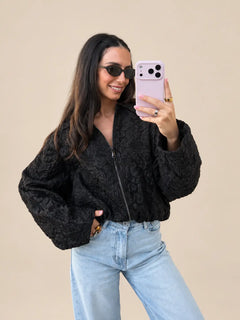
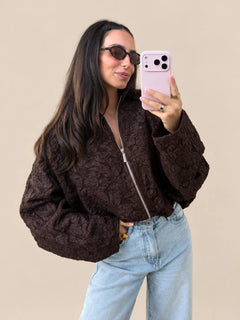
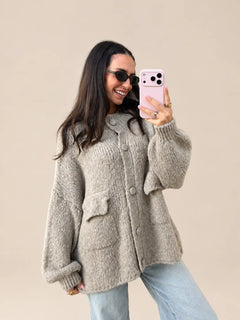
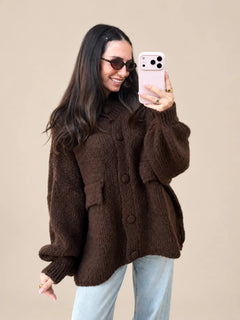
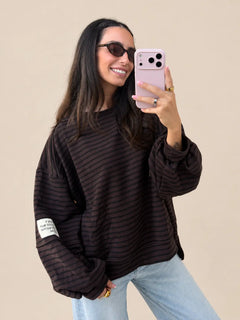
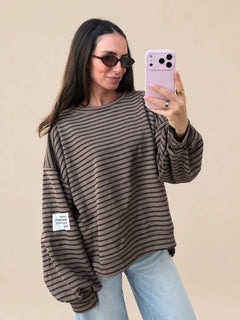
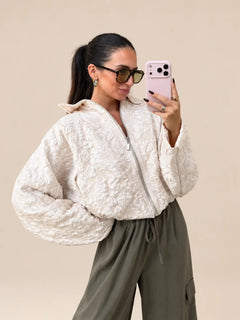
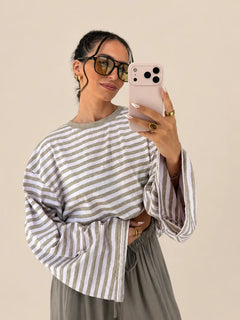


With oversized and relaxed-fit clothing, the extra room is usually already built into the cut. So go by your body measurements, a well-fitting favourite garment and the material and size information on the product page.
Loose cuts are wonderfully comfortable, but before ordering the same question often comes up: which size fits? That is exactly what we'll look at together. You'll learn how to take your measurements correctly, how much room a loose piece actually has and how to use a favourite garment for comparison.
Oversized: Which Size Suits Loose Cuts?
With fitted clothing, the calculation is simple: body measurement plus a little freedom of movement. Loose clothing works with considerably more room, and that is intentional. In pattern making this extra allowance is called ease. Typical values at the bust are:
- Fitted, no stretch: about 4 to 6 cm more than your body measurement
- Regular comfortable, such as a blouse or shirt: about 6 to 10 cm
- Loose and relaxed cut: about 10 to 14 cm
- Clearly oversized and boxy: about 12 to 25 cm
What this means for you: with a loose dress, the extra room is usually already planned into the cut. The product page lists the material and the available sizes; the product photos show how a style falls. How to keep wide cuts balanced is shown in How to wear oversized.
Women's Dress Sizes: Your Measurements in Three Steps
All you need is a tape measure, thin underwear and two quiet minutes. Measure standing up, with your arms hanging loosely and breathing normally, without pulling your stomach in.
- Bust: place the tape horizontally around the fullest part of the bust, parallel to the floor at the back. Snug, but not tight.
- Waist: the narrowest point between the ribcage and hip bone, usually around navel height. A little trick: bend your upper body to the side, and that is exactly where your waist is.
- Hips: stand with your legs together and place the tape around the widest part of the hips and bottom.
As a general guide for German dress sizes, these reference values in cm apply, for bust, waist and hips respectively:
- Size 34: around 78 to 81, 64 to 66, 88 to 91
- Size 36: around 82 to 85, 67 to 70, 92 to 95
- Size 38: around 86 to 89, 71 to 74, 96 to 98
- Size 40: around 90 to 93, 75 to 78, 99 to 101
- Size 42: around 94 to 97, 79 to 82, 102 to 105
For a quick estimate, the old tailor's rule helps: bust measurement divided by two, minus 6. At 92 cm, that gives German size 40. Individual styles may differ from these reference values; the product page lists the material and the available sizes.

Judging a Relaxed Fit: The Favourite-Garment Trick
A reliable aid is already hanging in your wardrobe. Take the loose dress or shirt you feel really comfortable in and make it your benchmark. Here's how:
- Lay it flat: place the garment smooth and wrinkle-free on a table, close buttons and zips.
- Measure the bust: measure from armpit seam to armpit seam. This value times two gives the finished bust measurement.
- Waist and hips: do the same from side seam to side seam, also times two.
Now subtract your body measurement. An example: your favourite shirt measures 51 cm flat, giving a finished measurement of 102 cm. Your bust measures 92 cm. The difference of 10 cm is your very own comfort ease.
You can use this value as a reference when trying on new pieces. It often tells you more about your fit than a general chart, especially with loose dresses and casual tops.
Belt, Tie and Elastic: Adjusting the Fit Yourself
Many loose pieces come with a way to adjust them.
- Waist tie: you decide how much volume you gather.
- Smocked sections: the elastic part at the neckline or waistband gives a little.
- Elastic waistband: practical for loose, airy trousers.
- A belt: a quick way to gather a loose dress at the waist.
With knitted dresses and full, swinging dresses, a belt is especially worthwhile. One style, two looks: once falling relaxed, once with a clear waist.
With wide trousers, the waistband is the key point. Wide high-waisted cuts are often seen in 2026, from Marlene trousers to palazzo and wide leg. Take your time measuring your waist and compare it with a well-fitting pair of trousers from your wardrobe. Wide styles in denim can be found in the jeans.

Jackets and Knitwear: Factor in Layers When Choosing a Size
With jackets and cardigans, there is one more point that no table covers: what are you wearing underneath? A transitional jacket that falls loosely over a thin top sits noticeably closer over a chunky jumper.
- Pick a comparison piece: take a jacket from your wardrobe that you like wearing over knitwear and measure it flat from armpit seam to armpit seam.
- Check the sleeves: wide sleeves leave more room over a jumper than slim ones.
- Open or closed: a cardigan you mostly wear open can be a little snugger than one you button up.
You'll find styles among our transitional jackets and cardigans.
Always Check One Size Style by Style
One Size is not standardised and can fit differently from style to style. So check the size information and the material on the product page and compare it with a well-fitting garment from your wardrobe. What One Size means is explained in the guide to One Size and fit.
The Fabric Has a Say
Two dresses in the same size can feel different because the fabric falls differently, more on this in the fabric glossary for womenswear.
One more note: the reference values above are a general guide; the product photos show how a style falls.
Matching pieces in the shop: oversized jumpers and New In.
Frequently Asked Questions
Oversized: which size should I choose?
With oversized pieces, the extra room is usually already built into the cut. Compare your body measurements with a well-fitting favourite garment; the product photos show how a style falls.
Which size should I order for loose cuts?
With loose cuts, the ease is already part of the pattern. The product page lists the material and the available sizes; the product photos show how a style falls.
How do I find my women's dress size?
Measure your bust, waist and hips and compare the values with the reference values above. As a rough rule of thumb: bust measurement divided by two, minus 6, gives the approximate German dress size.
I'm between two sizes, what should I do?
Go by the area with the least room. For tops that's the bust, for trousers and skirts usually the waist or hips. Compare that area with a well-fitting piece from your wardrobe.
What does One Size mean?
One Size is not standardised and can fit differently from style to style. So check the size information and the material on the product page and compare it with a well-fitting garment from your wardrobe.
More on Oversized
More questions
What does a relaxed fit mean?
A relaxed fit has more room at the bust, waist and hips than a close-fitting cut. The piece hangs loosely without looking too big.
Which trousers go with an oversized jumper?
Slim trousers such as leggings, skinny or straight jeans balance out a wide top. With wide trousers, tuck the jumper loosely into the waistband at the front.
How do I style an oversized blouse?
Wear it open over a top, half-tucked into your trousers or belted over a dress. With slim trousers it can hang long; with wide trousers keep it shorter or tucked in.